AI Upskilling
Project
What began as a request to refresh a few AI courses quickly became an opportunity to rethink what effective AI education should look and feel like.
This project traces how research, strategy, and human-centered design transformed a course refresh into a new model for AI upskilling.
Teaches HR and L&D professionals how to use AI and analytics to personalize training, improve performance, and build ethical, future-focused talent strategies.

Empowers professionals to apply generative AI to real workplace challenges, improving decision-making, collaboration, and operations—no technical background required.

Upskills educators to build AI-driven strategies that enhance instructional design, deepen student engagement, and close feedback loops across the higher ed ecosystem.

Guides educators in applying AI tools confidently and responsibly to transform lesson planning, assessment, and student learning in modern classrooms.

Context
ASU launched a university-wide initiative to upskill learners around the world in AI, spanning faculty, staff, and professionals across industries. As part of this effort, the Learning Enterprise asked me to redesign several asynchronous AI courses for workforce relevance.
What began as a course refresh quickly evolved into an opportunity to reimagine how ASU teaches AI.
Rather than beginning with content updates, I started by exploring learner needs, workforce expectations, and AI's evolving role in professional practice.
Challenge
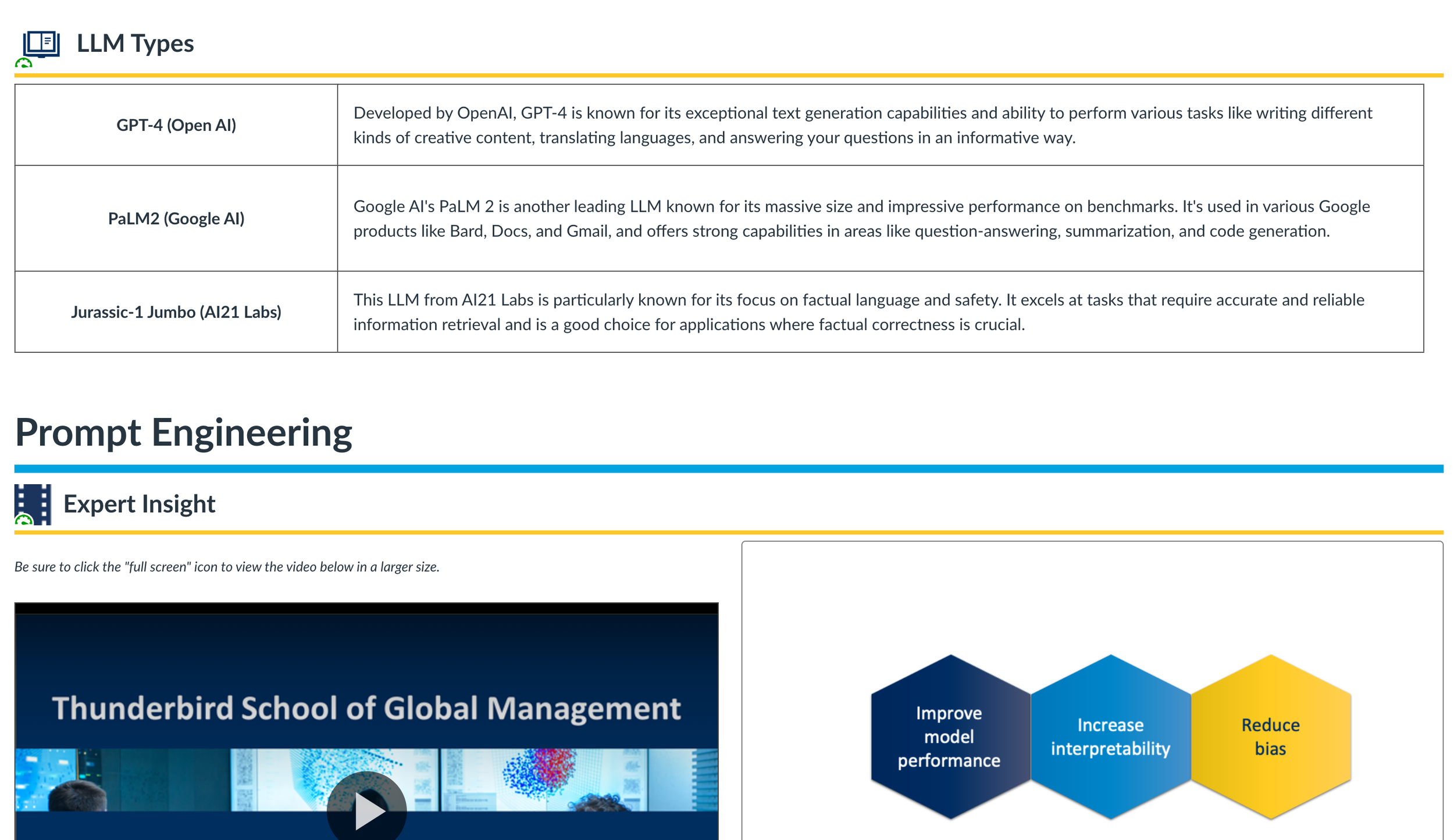
As I evaluated the existing courses, it became clear they needed more than content updates. While a handful of concepts remained relevant, the learner experience no longer reflected how people were beginning to use AI in their work. The courses lacked meaningful application, workforce relevance, intuitive experience design, and opportunities for learners to actively collaborate with AI.
The challenge wasn't simply improving the courses—it was rethinking what effective AI education should look like.
My Role
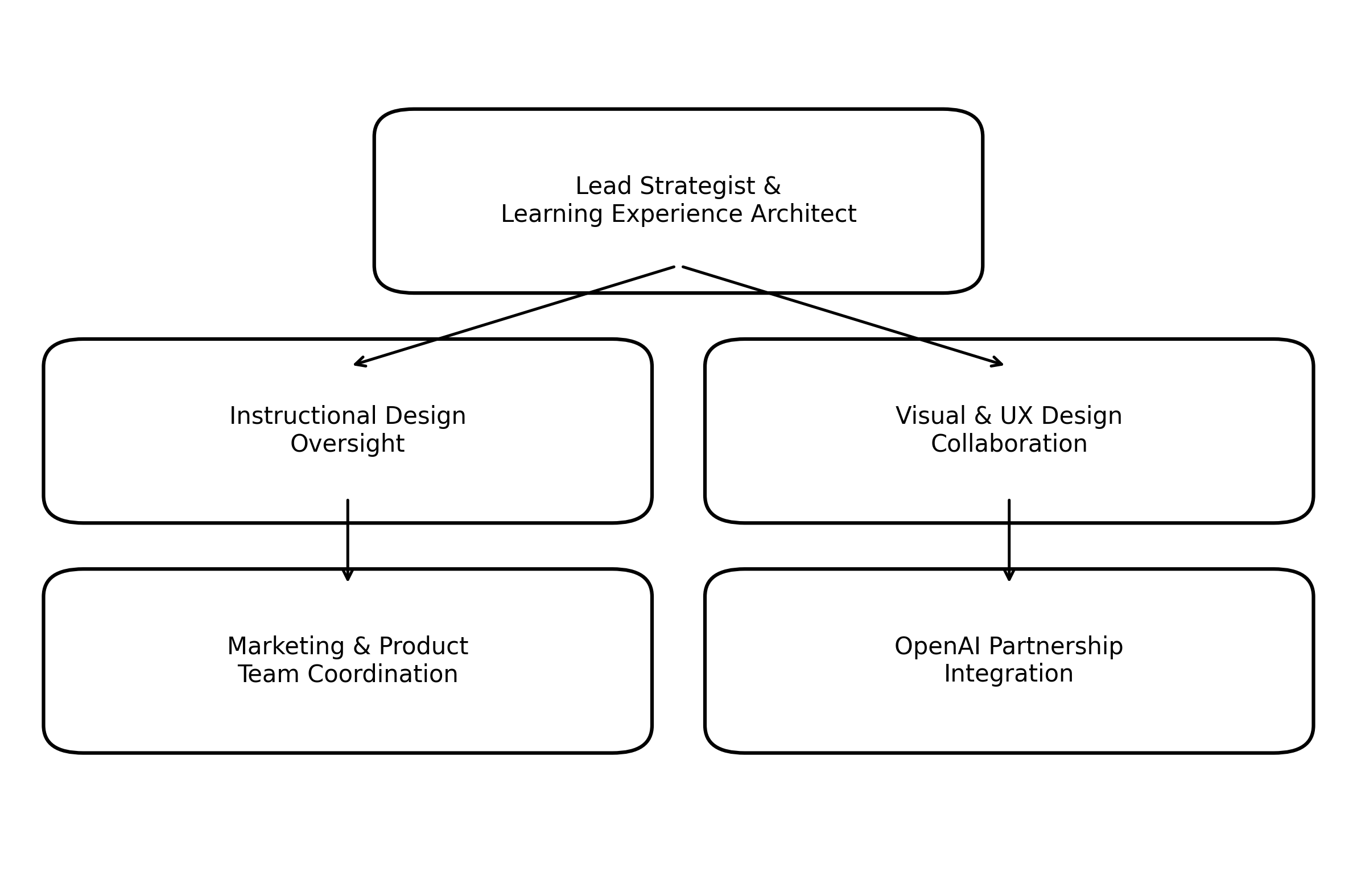
I served as the architect and lead for the full redesign of the AI learning suite—shaping the experience strategy, instructional approach, UX vision, and overall product direction.
I partnered with instructional and graphic designers, marketing, product, and technical teams while leveraging ASU's partnership with OpenAI to integrate ChatGPT into both the design process and the learner experience.
My role spanned research, experience strategy, learning architecture, rapid prototyping, cross-functional leadership, and iterative refinement to ensure the courses were practical, ethical, and designed for real-world application.
Process
The redesign began with discovery—examining learner needs, workforce expectations, and emerging AI practices before defining a new learning architecture. From there, I mapped learning outcomes, skill progression, and shared design principles that could flex across multiple audiences while maintaining a consistent experience.
Working closely with instructional designers, visual designers, and technical partners, I prototyped activities, assessments, and AI-enabled workflows through an iterative design process. Each refinement focused on creating experiences learners could actively engage with—not simply content to move through.




Solution
The final solution was a fully redesigned suite of four AI courses built around a simple philosophy:
AI is not just a topic to learn about—it’s a collaboration partner learners actively work with throughout the experience.
Each course was rebuilt around a learning arc that blends concept-building, guided practice, reflection, and applied project work. Learners work alongside AI throughout the experience—using it to explore ideas, generate drafts, test assumptions, and refine their thinking—while also learning to evaluate outputs critically and ethically.
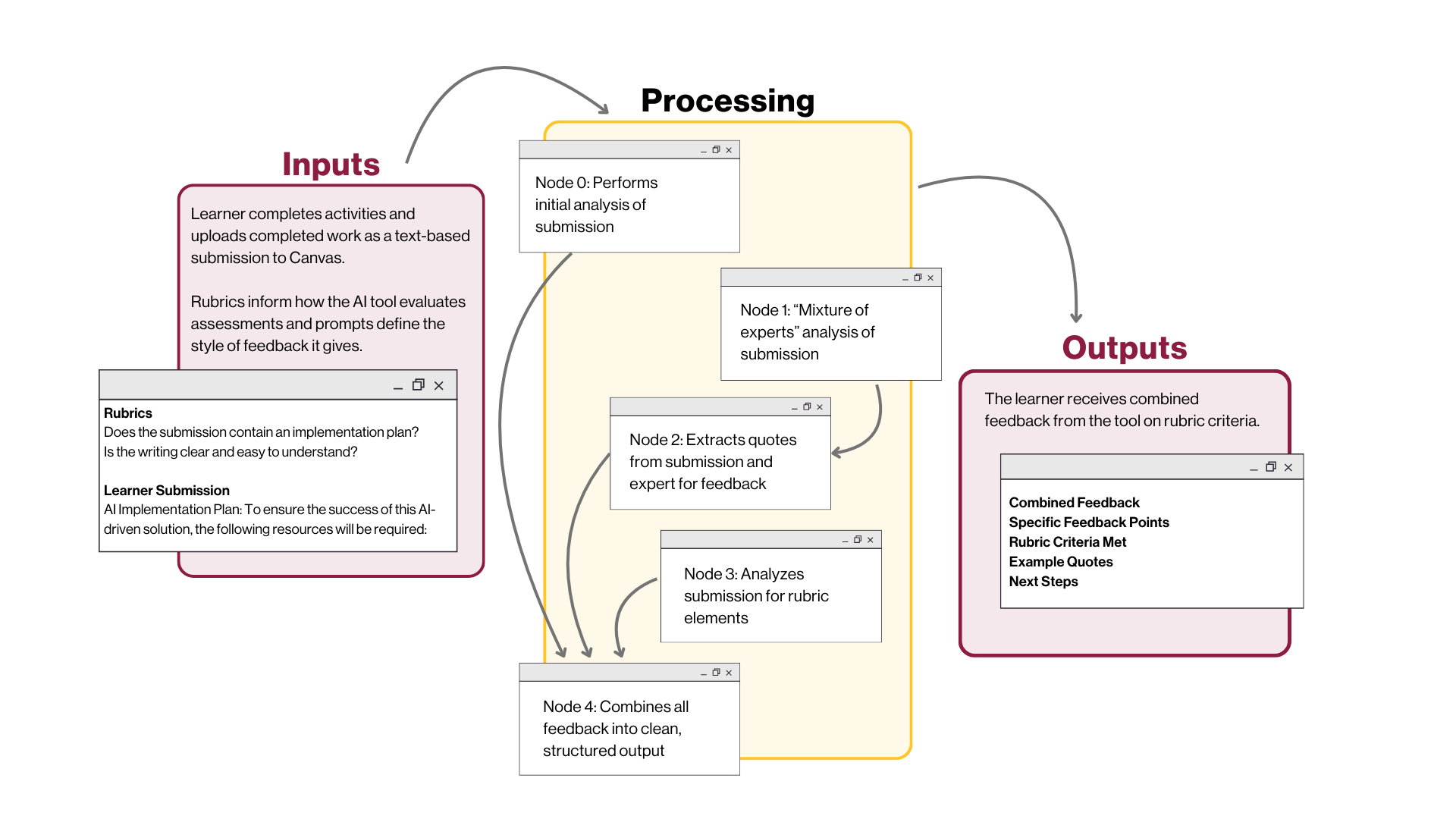
To support this process, I designed an AI-powered feedback grader that provides immediate, structured feedback on project work, reinforcing learning in real time while modeling how AI can support—not replace—human judgment.
Reflection is embedded throughout the experience through a guided learning journal, prompting learners to pause, make meaning, and articulate how AI is shaping their thinking, decisions, and professional practice. Together, collaboration, feedback, and reflection transform AI from a passive tool into an active learning partner.
Each course now includes…
-

Up-to-date AI concepts contextualized for distinct audiences (higher education, K–12, workplace, HR/L&D)
-

Hands-on activities and practice prompts grounded in real-world use cases
-

AI-as-collaborator workflows embedded across modules
-
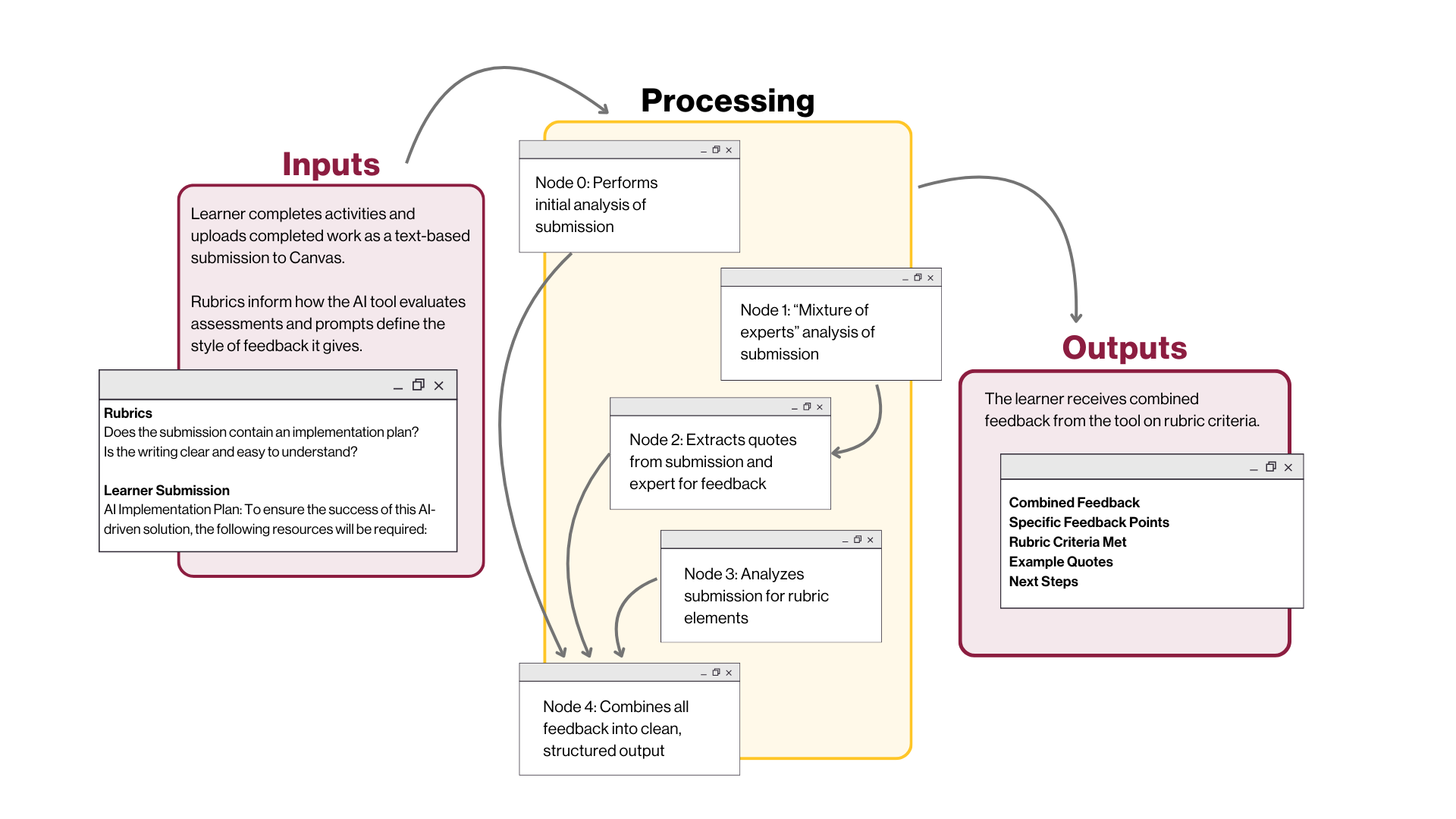
An AI-powered feedback grader delivering immediate, formative feedback on project work
-
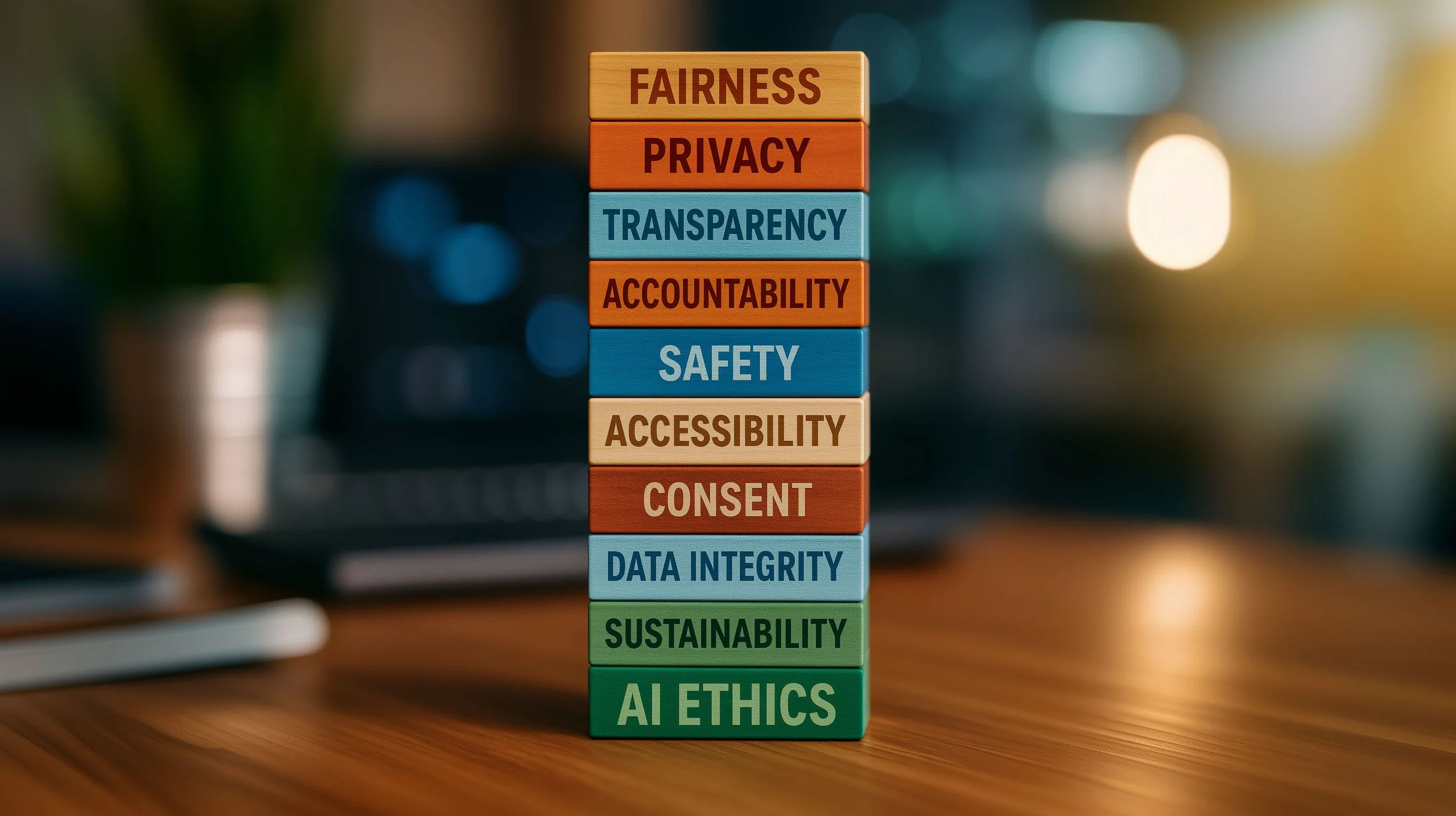
Ethics and risk-assessment frameworks woven throughout the learning journey
-

A capstone artifact (e.g., AI Teaching & Engagement Strategy, AI Talent Strategy Plan) learners can use beyond the course
-
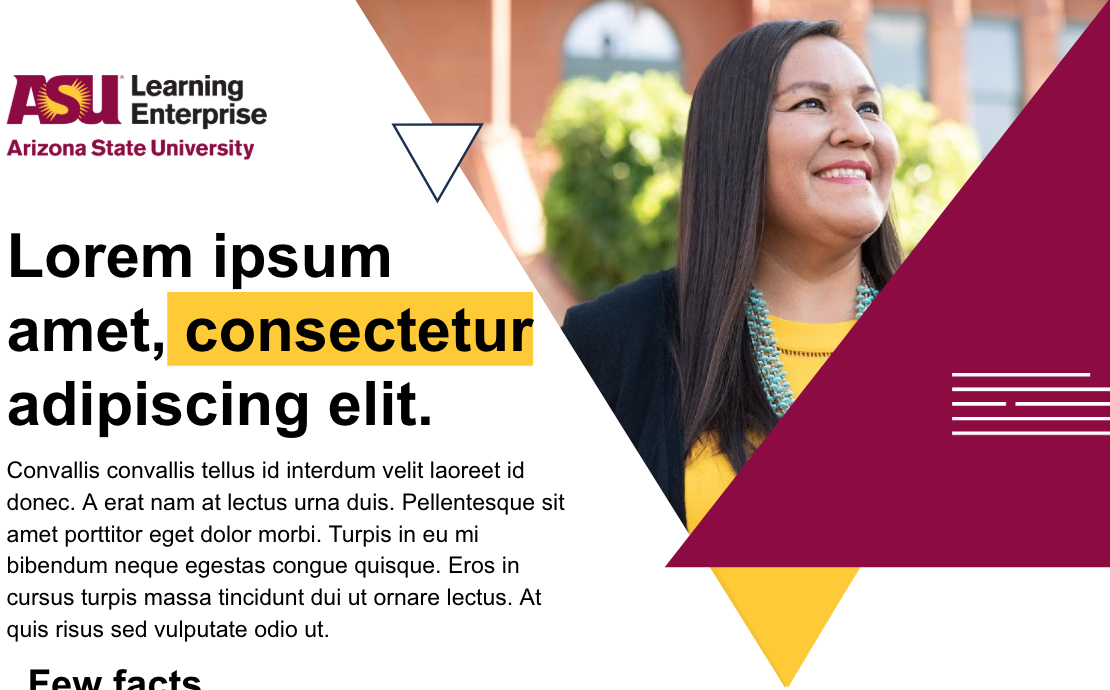
Clear UX patterns that reduce cognitive load and support intuitive navigation
-

Modern visual and instructional design aligned with ASU brand and accessibility standards
Impact
The redesigned AI learning suite has become a cornerstone of ASU's broader AI upskilling strategy. Executive Vice President and University Provost Nancy Gonzales made the courses available at no cost to all ASU employees, signaling strong institutional confidence in their quality and impact.
The Learning Enterprise incorporated the courses into its organizational OKRs to support AI capability building across the university. Learner feedback reflected increased confidence, clarity, and readiness to apply AI in authentic workplace contexts, supported by hands-on practice, immediate feedback, and portfolio-ready artifacts.
Together, these outcomes established a scalable model for ethical, applied AI education that continues to shape workforce upskilling across Arizona State University.